Vitals Sent automatically sends vital signs into the resident’s chart, so your staff spends less time documenting and more time caring for residents.
Typing residents’ vital signs into each resident’s chart by hand is slow and error-prone, taking clinicians away from resident care and making records less accurate.
By automatically sending vitals directly to the resident’s chart, Vitals Sent removes the need for manual data entry and improves accuracy.

In a study titled Eliminating Errors in Vital Signs Documentation, manually entering 64 sets of vital signs into the electronic medical record took an average of 39 minutes.

In contrast, the automated system reduced the average time to record and transfer 66 complete sets of vital signs to just over 5 minutes, with no manual steps or transcription errors.
Manual vital sign entry wastes staff time and costs your facility significantly. When you factor in correcting data entry errors, expenses multiply quickly. The example below shows the annual cost breakdown of a 75-bed SNF, 2 daily vital rounds, 5 manual vital entries per round.
You are already paying for manual work through staff time, rework, and oversight. Compare our monthly fee to the cost of continuing to do it by hand.
They can, but that is the issue. Typing vitals in by hand takes staff time, slows things down, and causes more errors than direct upload.
Staff push back on changes that add work. They usually accept tools that cut typing, lower frustration, and make daily tasks easier.
That concern is fair. A simple rollout by unit or shift keeps training easier and lets you measure results clearly without causing disruption.
This helps bigger goals by improving staff efficiency, record quality, survey readiness, accountability, and more consistent daily operations.
That makes sense. But every month you wait, staff keep doing extra data entry and leadership keeps paying for wasted time.
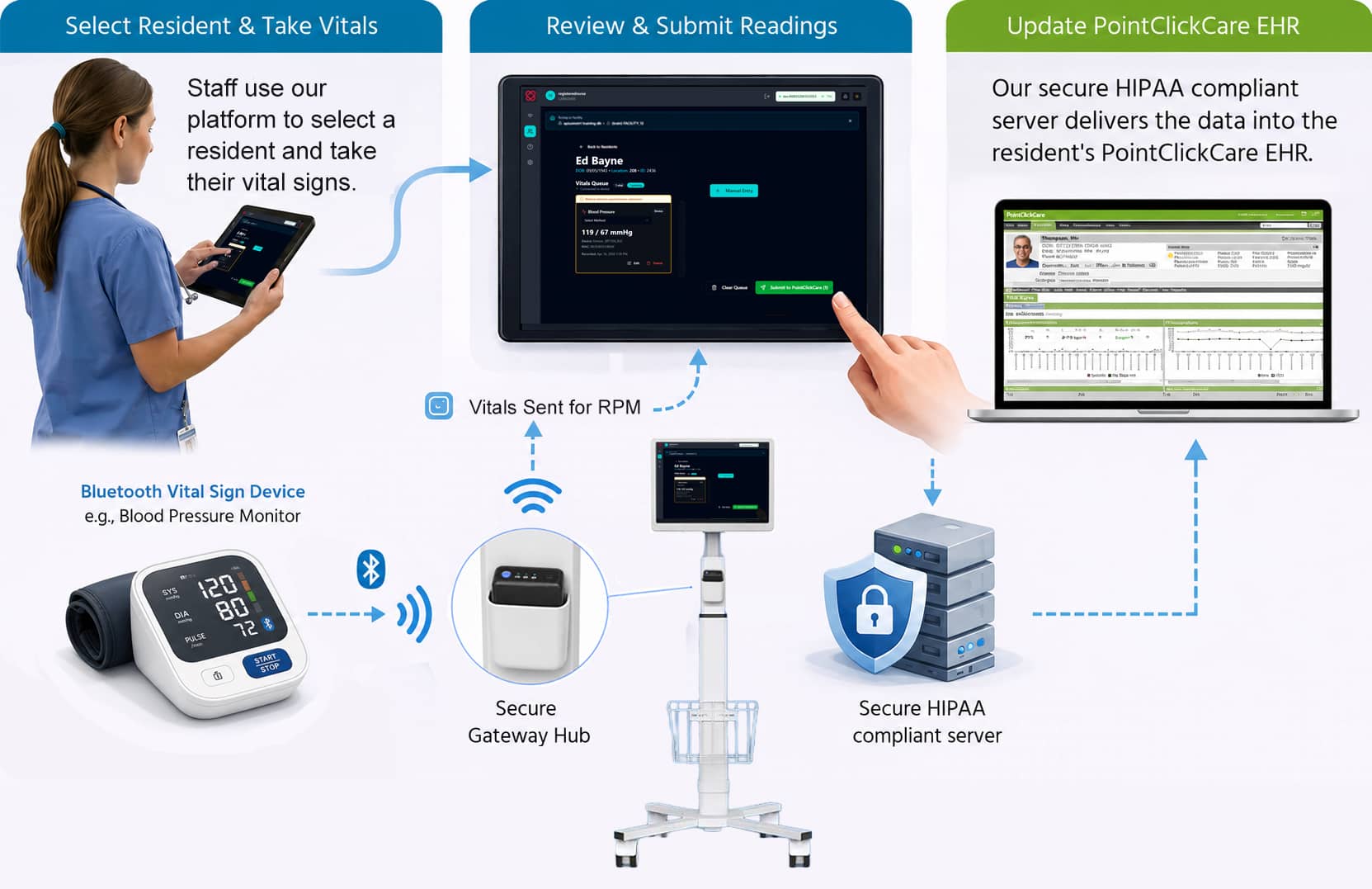
Staff log in to Vitals Sent with their Organization ID, then sign in to PointClickCare with the username and password they already use. Once they are signed in, they go back to the Vitals Sent home page and choose a resident on a secure tablet or laptop.
They take the resident’s vital signs using approved Bluetooth devices. These devices send the readings to our secure Gateway Hub. The Gateway Hub then sends the numbers to the resident’s profile in the Vitals Sent app.
They check the readings on the screen. If something looks wrong, they can take the vitals again or fix the numbers. When everything looks right, the nurse clicks Submit. Vitals Sent then sends the final vital signs straight to the resident’s electronic health record.
This video shows how Vitals Sent creates a new ongoing revenue stream for your facility.
Your nursing staff already take vital signs and monitor residents during normal care. When a physician oversees it and the right paperwork is in place, that work can become billable RPM revenue.
This income helps cover costs, buy equipment, and improve what you offer residents. As more residents join, the recurring payments create steady revenue without adding staff.
Here is how it works. Your facility sets a fair market value (FMV) fee for documented RPM services provided to eligible residents each month. The physician bills Medicare Part B and pays you that fee each month for every enrolled resident.
Vitals Sent automatically sends vital signs to the resident’s chart, giving physicians the recorded health data they need to bill for Remote Patient Monitoring.
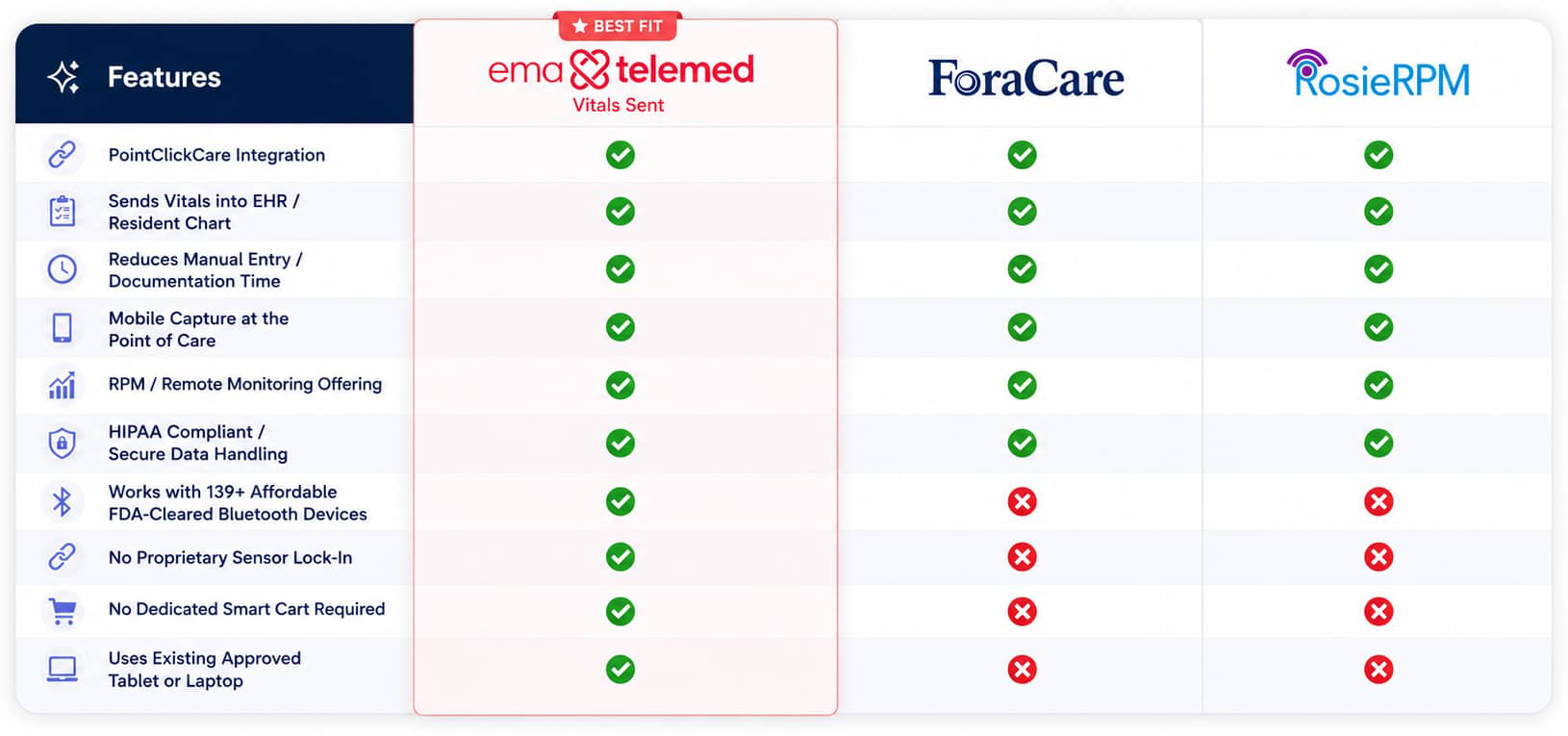
This comparison shows how Vitals Sent, ForaCare, and RosieRPM stack up on the features senior care teams value most. All three support core RPM workflows, but Vitals Sent offers more flexibility: it works with numerous affordable FDA-cleared Bluetooth devices, avoids proprietary sensor lock-in, doesn’t require a dedicated medical cart, and runs on an existing approved tablet or laptop.
We offer live online training and on demand videos through our platform. Staff can share feedback, and we use it to keep improving the system based on real user experience. Our hotline is here to help. Real people, not robots. They solve problems, calm frustration, and help get things back on track.
Costs vary by facility size. We’ll walk you through a clear plan for hardware, onboarding, and ongoing service. Contact us for pricing, a demo, or details on Vitals Sent.
Join facilities already reducing documentation errors, saving staff time, and creating new revenue with automated vitals capture.
Tell us about your facility and we’ll reply fast with next steps, pricing, and a demo.
Typical response time
Our typical response time is under 1 business day.
